The Land · October 2, 2026
Why GMU 59 holds elk in October
Geology, water, cover, and light hunting pressure. The south slope of Pikes Peak is not an accident — it's a place the herd has chosen for reasons you can see in the dirt.
Andre · 5 min read
Stewardship · A working ranch since 1888
The conservation work — water development, aspen regeneration, the wildlife corridor, wildlife-passable fencing — is the part of the operation that takes the longest to show and is most likely to matter when our great-grandchildren are walking these benches.
The short answer
Elk Glade approaches conservation as the long-arc job of stewarding a working ranch of 2,100 family-owned acres and over 25,000 leased acres, family-run since 1929. A Colorado Parks and Wildlife grant to help protect the largest wildlife corridor between New Mexico and Wyoming on the Colorado Front Range, plus work alongside land trusts and working-lands partners — the Colorado Cattlemen Agricultural Land Trust, the Western Landowners Alliance, and the Palmer Land Conservancy. The cattle operation, the hunt operation, and the conservation work are managed as a single integrated system.
On the record
The canyon system that falls away below the ranch is, in the words of the Colorado Springs Gazette, “the largest canyon system without roads from Wyoming to New Mexico.” Elk Glade holds the only road access into it — which means keeping it roadless, quiet, and whole comes down largely to how we choose to run this place.
The Sierra Club considers the roughly 132,000 acres of BLM, U.S. Forest Service, state, and private land that surround the ranch — with Elk Glade among the largest landowners in it — the most pristine land along the Colorado Front Range. That is the neighborhood our fence retrofits, spring developments, and grazing plans are built to keep intact.
Six pillars of the work
Elk Glade works alongside conservation partners and land trusts on water development, riparian protection, and rangeland improvement — including the Colorado Cattlemen Agricultural Land Trust, the Western Landowners Alliance, and the Palmer Land Conservancy. The work covers fence retrofits, spring development for cattle and wildlife, and invasive-species management.
Standard barbed-wire ranch fence is a barrier to mule deer, pronghorn, and small game. Where we replace fencing, we use the smooth-top / smooth-bottom wildlife-friendly standard — 40 inches tall maximum, with a 12-inch gap between the top wires. The retrofit is ongoing across the property; about 60% complete as of 2026.
Aspen stands across the Colorado Front Range are aging — many groves haven't successfully regenerated since the early 20th century. We work alongside conservation partners on small-scale mechanical aspen regeneration projects — selective cutting that triggers root-sucker regrowth and produces young aspen browse for elk and mule deer.
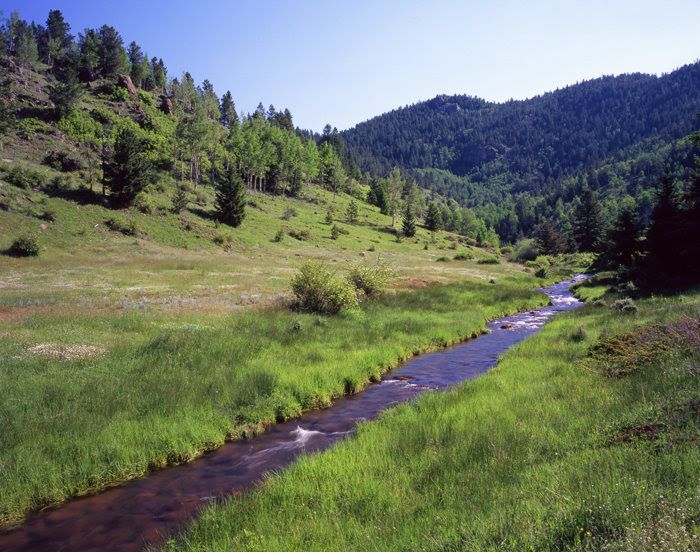
East Beaver Creek runs three miles through the property, year-round and spring-fed. We coordinate with downstream users to maintain instream flow during fall and spring spawning windows.
The ranch sits in the largest wildlife corridor between New Mexico and Wyoming on the Colorado Front Range — a distinction recognized with a Colorado Parks and Wildlife grant to Elk Glade to help protect it. Keeping this country intact and connected, so elk, mule deer, and the rest can move through it, is the long job underneath everything else.
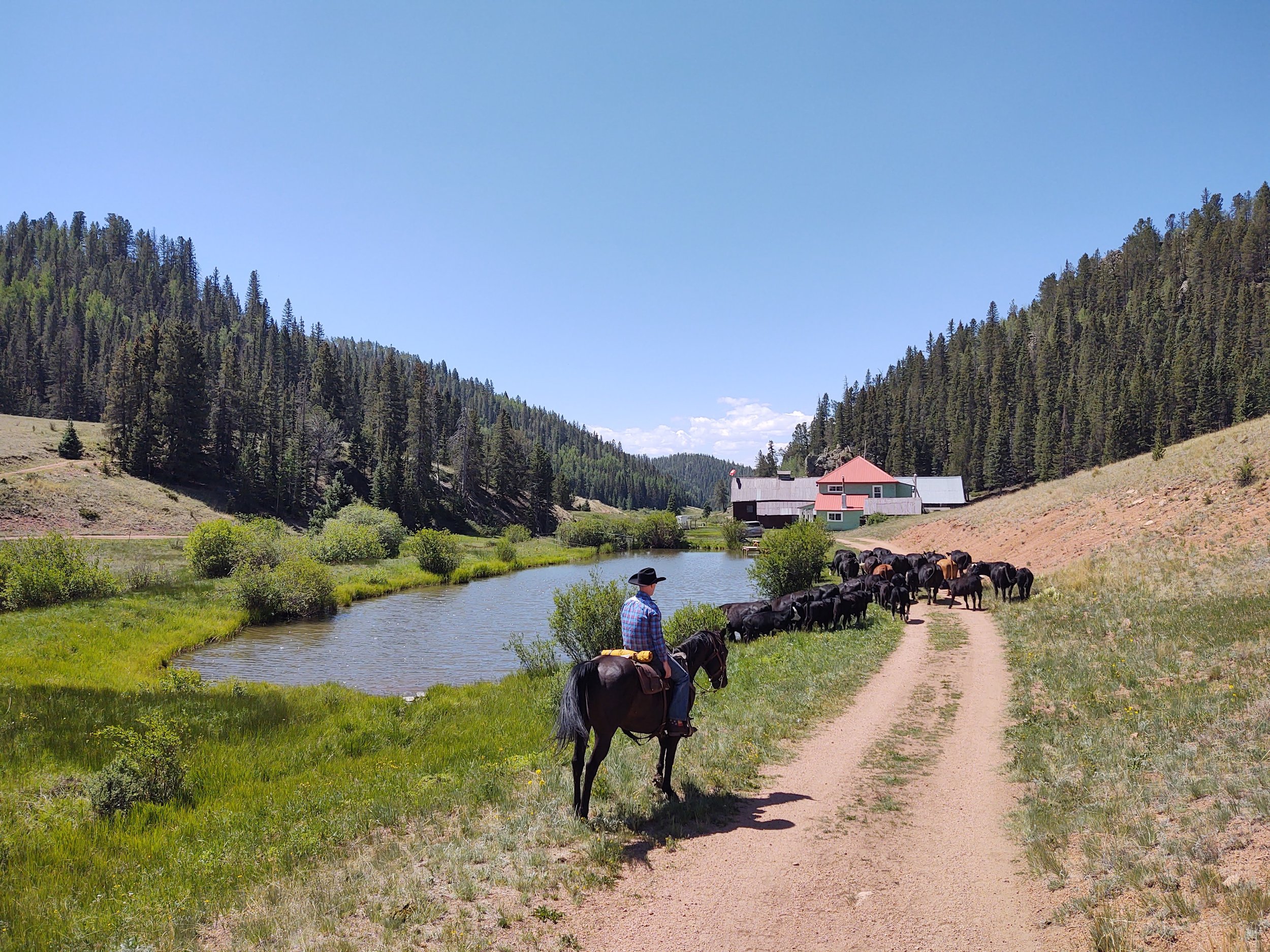
The cattle that graze the ranch — a local rancher's herd, under a grazing lease — aren't separate from the conservation work; they're part of it. Properly-timed cattle grazing knocks down ladder fuels that contribute to catastrophic wildfire, opens up dense ponderosa understory that suppresses elk browse, and maintains the bench meadows that hold the elk herd through fall. The cattle are the maintenance crew.
Partners
Colorado Parks and Wildlife (CPW)
Wildlife-corridor grant + habitat coordination
Visit site →Colorado Cattlemen Agricultural Land Trust (CCALT)
Working-lands conservation + easement stewardship
Visit site →Palmer Land Conservancy
Front Range land conservation
Visit site →Western Landowners Alliance
Working-lands peer network + policy engagement
Visit site →The long view
The ranch was founded in 1888. The family homesteaded this valley in 1929 and bought the Rathke place in 2001, and they’ve run it since. We still serve ranch meals in the historic ranch lodge, on the porch over the canyon. The continuity is the point.
Conservation, in this context, isn’t a marketing position or a policy stance. It’s the practical work of not breaking the run. Every fence retrofit, every spring development, every aspen regeneration plot is an investment in the property still being here, still being huntable, still being a cattle ranch, still being a working operation when our great-grandchildren are the ones at the gate.
The conservation work is also the operation’s long-term insurance policy against the things we can’t control — wildfire, climate-driven habitat shift, generational succession risk. Healthy habitat hedges all of those bets at once.
Elk Glade holds a Colorado Parks and Wildlife grant to help protect the largest wildlife corridor between New Mexico and Wyoming on the Colorado Front Range, and works alongside conservation partners and land trusts including the Colorado Cattlemen Agricultural Land Trust, the Western Landowners Alliance, and the Palmer Land Conservancy. Conservation work is funded through a mix of grants and direct ranch investment.
Properly-timed cattle grazing is a habitat tool. Cattle knock down ladder fuels that contribute to catastrophic wildfire, open up dense ponderosa understory that would otherwise suppress elk browse, and maintain the open bench meadows that hold the elk herd through fall. The grazing lease and the wildlife habitat are managed as a single integrated system.
Yes — the question has come up across multiple generations of the family. The ranch operation and the conservation work continue under the family's stewardship, in partnership with the landowners and agencies involved. The trade-offs of long-term protection remain under regular discussion.
Wildlife-passable ranch fencing follows the smooth-top / smooth-bottom standard: maximum 40 inches tall, smooth wire on the top and bottom strands, with a minimum 12-inch gap between the top wires for deer and pronghorn passage. Standard four-strand barbed wire is the barrier; the wildlife-friendly retrofit replaces it.
The most direct support is booking — a portion of every hunt, cattle drive, and ranch-stay fee underwrites the ongoing conservation budget. Hunters can also contribute directly to the land trusts and working-lands groups we partner with, including the Colorado Cattlemen Agricultural Land Trust and the Palmer Land Conservancy, which protect working ranchland like ours.
Visit + support the work
A portion of every hunt, cattle drive, and ranch-stay fee funds the conservation budget directly. Want to support the work without booking? The land trusts and working-lands groups we partner with — the Colorado Cattlemen Agricultural Land Trust and the Palmer Land Conservancy — protect working ranchland like ours.
From the journal
The Land · October 2, 2026
Geology, water, cover, and light hunting pressure. The south slope of Pikes Peak is not an accident — it's a place the herd has chosen for reasons you can see in the dirt.
Andre · 5 min read
The Land · September 30, 2026
The elk herd and the cow herd eat the same forage, water the same creek, and want the same south-facing slopes. Managing both on one ranch is the whole job.
Jim Johnson · 3 min read
The Land · September 16, 2026
The shot is the easy part. The moment a bull hits the ground, the real work — and the race against the heat — begins.
Jim Johnson · 3 min read