Skip to content

Colorado · Mule Deer

Colorado mule deer on the south slope, off the alpine.

Hunted alongside elk on the 6-night combo (if successful), or add a deer voucher for $750 when available. Three-and-four-year-old bucks on ponderosa benches and upper aspen draws in GMU 59.

The mule deer cycle on the south slope of Pikes Peak is a migration story. Bucks summer in the alpine, hold around the dark-timber edge through the rut, and drop onto the south-facing ponderosa benches on the first hard October frost. That’s where we hunt them.

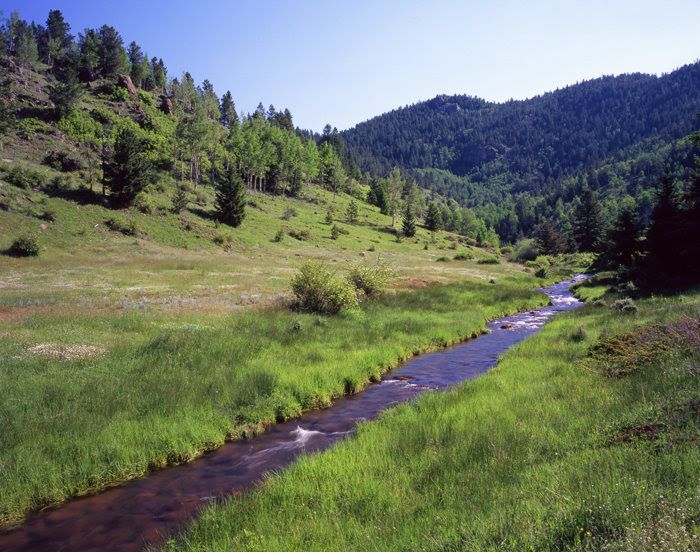
A guided mule deer hunt at Elk Glade is a quieter hunt than the elk season — fewer animals across the day, longer glassing sessions, more deliberate stalks. The country it shows you is some of the best on the property: open ponderosa with long sight lines, aspen draws turning gold in mid-October, and the south face of Pikes Peak holding the horizon to the north.

Our mule deer hunters hunt deer alongside elk on the six-night Elk + Deer or Bear combo, or add a $750 deer voucher to an elk hunt when one is available. Rifle 2 and rifle 3 are the favorite windows, when the bucks are out of the timber and most predictable.

How we hunt them.

We start each morning glassing one of three benches we’ve known for decades — the East Beaver bench, the south meadow rim, or the upper Sawmill draw. Wind, light, and the previous evening’s temperature decide which bench we sit. By an hour after sunrise we’ve usually found bucks; the rest of the morning is the stalk.

Midday we either still-hunt the shade lines where bucks bed in the heat, or we move up to high cover and glass into draws we can’t see from below. A surprising number of mule deer in Colorado get killed at one in the afternoon by hunters who kept glassing when most quit.

Last-light glassing returns to a different bench than the morning — we work the west-facing exposures that catch sunset light. The buck that walks out of timber at 4:30 to feed is the one we’re after.

Across a hunt week we typically see 8–20 bucks per day, of which 3–5 are mature 3- or 4-year-old animals. We pass on smaller bucks unless a hunter specifically wants meat over horn.

What’s included

  • →Guided hunting across the six-night elk hunt (1:2 guide ratio standard)
  • →Lodging at the ranch lodge — private rooms, hot showers, indoor facilities
  • →Three meals a day at the lodge
  • →Field dressing, packing, and game care to the cooler
  • →ATV / jeep / horse transport for in-field access — no additional charge
  • →On-site historic slaughterhouse for guests who want to process their own game
  • →Pre-hunt zero / weapon check
  • →Ground transportation from Colorado Springs Airport

What’s not

  • ·Colorado mule deer license and tag
  • ·Habitat stamp
  • ·Game processing beyond the cooler
  • ·Taxidermy or cape preparation
  • ·Tips for guides

Colorado non-resident deer license currently ≈$450 plus the habitat stamp. See Licenses + Permits + Draws for the full draw process.

Frequently asked.

When is mule deer season in Colorado?

Colorado runs limited mule deer seasons across archery (late August through mid-September), muzzleloader (mid-September), and three rifle windows in October and early November. Elk Glade primarily hunts rifle 2 and rifle 3 — the windows when bucks have come off the alpine and are patternable on the south-slope ponderosa benches.

Is mule deer hunting on a draw tag?

Yes. Nearly all mule deer hunting in Colorado is by limited draw. Applications open in early March and close in early April. We help every guest pick the right unit, season, and preference-point count for the country we hunt. Most non-residents need 1–3 preference points to draw the units we run.

What's the trophy potential at Elk Glade?

We see consistent 3- and 4-year-old bucks across the property — the kind of buck that produces a solid representative trophy. The bigger, older bucks live in the high-canyon dark timber and come out for the rut and the first hard snow. We pass on sub-mature bucks unless it's the last morning of a hunt and a hunter has been holding out.

Can I combo a mule deer hunt with an elk hunt?

Yes — this is the most popular package, and in 2026 it's how mule deer is hunted here: there's no standalone mule deer package. The Archery, Muzzleloader, and Rifle Elk + Deer or Bear combo packages bundle a bull elk hunt with a mule deer (or bear) tag for $11,450 total (6 nights), charged only if you're successful on the deer or bear. If a deer voucher is available, you can instead add a mule deer tag to a straight elk hunt for $750. Tags are still your responsibility through the CPW draw; we coordinate the application strategy and price the specifics on a quote.

What's the terrain like for mule deer?

Mule deer on the south slope live on ponderosa benches and the upper aspen draws between 7,000 and 9,500 feet. The hunting is glass-and-stalk — long looks at distance, then a deliberate approach. Less hiking than elk, more glassing. Older or less mobile hunters can hunt mule deer comfortably from truck and ATV access on the lower country.

Do you offer cow / doe / antlerless hunts?

Doe mule deer tags are limited in the units we hunt; we generally don't run antlerless-only mule deer hunts. If you draw a doe tag separately, we'll work to fill it as part of a longer trip — call us to discuss.

Add it to a bull elk hunt

The most popular package on the ranch.

The Elk + Deer or Bear combo runs $11,450 across 6 nights if successful — $1,500 over an elk hunt alone, and you pay the combo rate only if you also take a deer or bear. There’s no standalone mule deer package in 2026; if you’d rather keep it simple, a $750 deer voucher (when available) adds a mule deer tag to a straight elk hunt. Either way, tell us your tags and dates and we’ll price it on a quote.