Skip to content

The complete elk reference · Cervus canadensis

Elk.

The second-largest deer on Earth, the loudest animal in the autumn high country, and the reason this ranch has a name. A field-grounded guide to the wapiti — subspecies, size, antlers, the bugle, diet, habitat, and where the million elk of North America actually live.

At a glance

The elk, by the numbers.

Scientific name
Cervus canadensis
Other name
Wapiti (Shawnee/Cree: “white rump”)
Family
Cervidae (deer family)
Size rank
2nd largest deer on Earth (after moose)
Bull weight
700–1,100 lb (Roosevelt to ~1,300)
Cow weight
500–600 lb
Shoulder height
4.5–5 ft
Antler spread
Up to ~4 ft; a pair can weigh 40 lb
Lifespan
10–13 yr wild; ~20 in captivity
N. America population
~1,000,000 (CO largest, ~280,000)
Diet
Ruminant grazer + browser; grasses, forbs, woody browse
Rut
Mid-September – mid-October

The animal

Second only to the moose.

The elk is the second-largest member of the deer family, behind only the moose. A mature Rocky Mountain bull stands close to five feet at the shoulder, carries 700 to over 1,100 pounds, and grows — then drops — a full rack of branching antlers every single year. The animal is built for the edge country between timber and meadow: long legs for snow and deadfall, a four-chambered ruminant stomach that turns coarse grass and woody browse into the mass it needs to survive a high-country winter.

Elk are herd animals. Cows and calves move in nursery groups led by a lead cow; bulls run in bachelor bands most of the year and gather harems only during the September rut. That social structure is the reason the bugle exists — it is a herd bull’s advertisement and a satellite bull’s challenge, the single most evocative sound in the North American autumn.

They were once nearly everywhere on the continent — from the Atlantic coast to the Pacific, in numbers estimated near ten million before European settlement. Market hunting and habitat loss collapsed that to a few tens of thousands by 1900. The recovery to roughly one million elk today is one of the great conservation stories in North America, and it is the reason a working ranch on the south slope of Pikes Peak can guide bull hunts at all.

Go deeper

The elk, in detail.

Each of these is a full field reference on one piece of the animal. More are added as the library grows.

Elk subspecies

The four living North American subspecies — Rocky Mountain, Roosevelt, Tule, Manitoban — plus the extinct Eastern and Merriam's. Range, size, and how to tell them apart.

Read the reference →

Elk antlers

The annual growth-and-shed cycle, velvet, why antler is the fastest-growing bone in any mammal, how Boone & Crockett scoring works, and what a 6x6 'royal' actually means.

Read the reference →

The bugle + elk sounds

Bugle, chuckle, glunk, cow mew, estrus chirp, bark. What each vocalization means, when elk make it, and why the bugle carries for miles across a canyon at dawn.

Read the reference →

What elk eat

A ruminant grazer and browser that follows the spring green-up uphill and survives on bark by February. The seasonal diet, daily intake, and the four-chambered stomach.

Read the reference →

Where elk live

The forest-meadow edge, summer high country and winter range, the migration corridors between, elevation, predators, and every state that holds an elk herd.

Read the reference →

Elk behavior + lifecycle

The cow-led herd, bachelor bulls, the September rut and harems, spring calving, lifespan, and how elk defend against wolves and lions. The behavior behind the bugle.

Read the reference →

Elk vs. deer

Same family, very different animal. Size, antlers, behavior, range, and how to tell an elk from a mule deer or whitetail at a glance.

Read the reference →

Elk vs. moose

The two biggest deer in North America — and the naming tangle that calls a moose an 'elk' in Europe. Palmate vs. branching antlers, herd vs. solitary.

Read the reference →

How big is an elk?

Horse-sized and four to six times your weight. Bull, cow, and calf weights, shoulder height, antler spread, and size by subspecies and against a human, horse, moose, and deer.

Read the reference →

28 elk facts

The fastest-growing bone on Earth, a bugle that carries a mile, a lead-cow-run herd, and a million-elk comeback. The most striking verified facts, scannable.

Read the reference →

Baby elk (the calf)

Thirty-five pounds, spotted like sun on grass. When elk are born, why calves wear spots, how long they hide, and how they survive their first dangerous summer.

Read the reference →

Elk predators

What eats elk — mountain lions, wolves, bears, coyotes, and managed human hunting. Who takes adults versus calves, and how the herd keeps elk alive.

Read the reference →

Elk vs. caribou

Two deer that share almost nothing — antlers on both caribou sexes, snowshoe hooves, Arctic range. Plus why a reindeer is a caribou.

Read the reference →

Elk tracks + sign

The rounded, heart-shaped hoof bigger than any deer's, the scat that changes with the season, and the rubs, wallows, and beds that say a bull is using the country.

Read the reference →

Elk ivory

Two small teeth of true ivory in the upper jaw — a leftover from before antlers, carried by bulls and cows alike, and long kept as a memento of the hunt.

Read the reference →

Do elk migrate?

High country in summer, winter range below. How elk follow the spring green-up uphill and the fall snow back down, how far they travel, why some stay resident, and why corridors matter.

Read the reference →

How long do elk live?

Ten to thirteen years wild, near twenty in captivity, and cows outlast bulls. What ends most elk lives, why worn teeth set the ultimate limit, and how a biologist reads an elk's age.

Read the reference →

Elk vs. red deer

Once one species, now usually split — the North American elk (wapiti) vs the European red deer. Size, antlers, range, and the bugle-versus-roar that tells them apart.

Read the reference →

The elk rut

The September–October breeding season — bulls bugling dark to dark, harems of cows, wallows, and fights. When the rut peaks and why it's the wildest show in the mountains.

Read the reference →

Range

Where the million elk live.

ColoradoLargest herd in the world — ~280,000
Montana~140,000 across the western two-thirds
Wyoming~110,000; the Jackson herd winters on the refuge
Idaho~120,000 in the central wilderness + panhandle
OregonRoosevelt elk on the coast, Rocky Mountain east
Utah~80,000; trophy genetics in the limited units
New Mexico~70,000; the Gila and the northern ranges
Arizona~35,000; the Mogollon Rim and White Mountains
WashingtonRoosevelt west of the Cascades, Rocky east
Eastern reintroductionsKY, PA, AR, TN/NC, MI, WI, VA

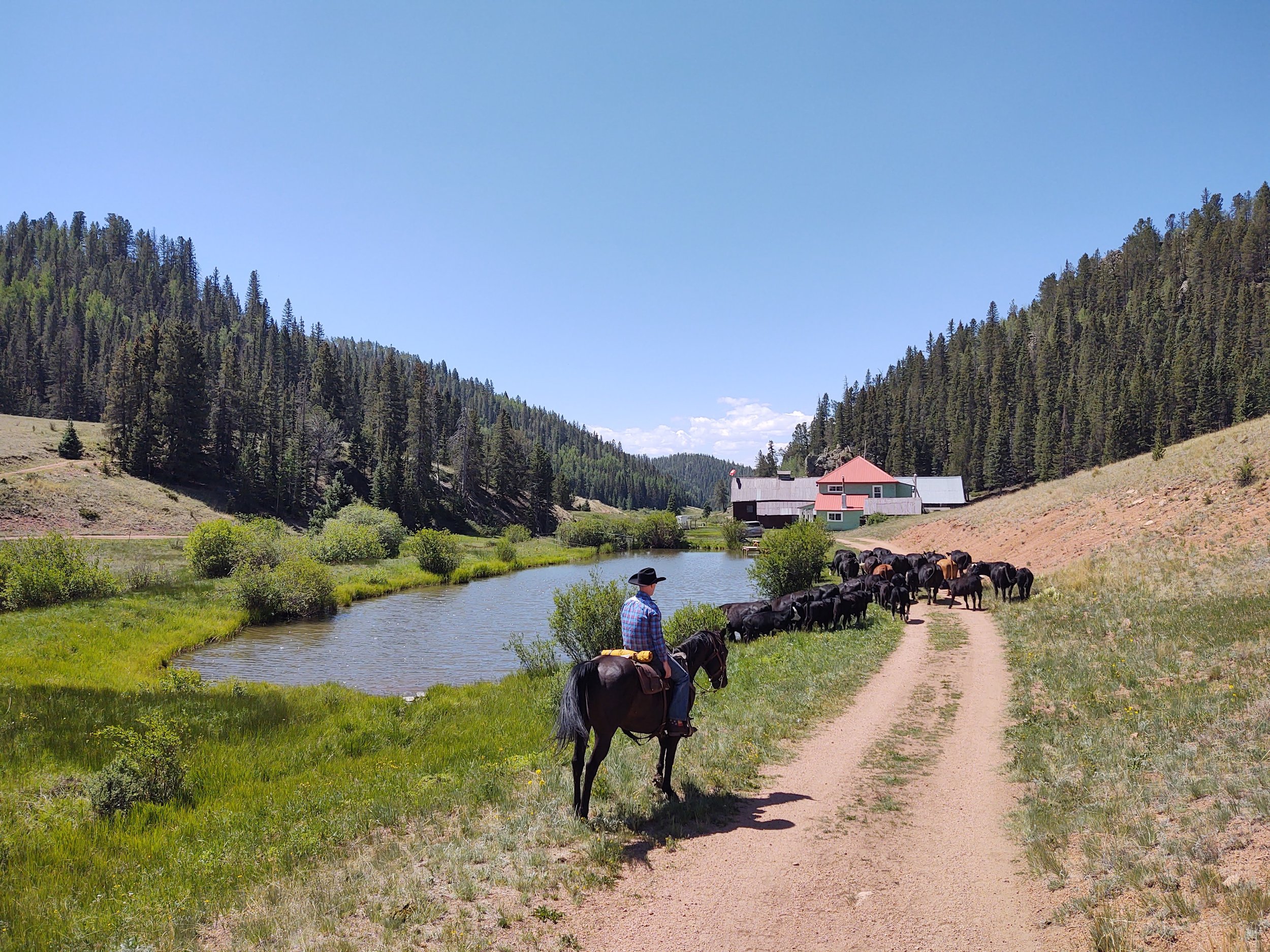
Colorado holds the largest elk population of any state — and of any place on Earth. Elk Glade sits inside that herd, on the south slope of Pikes Peak in GMU 59.

Habitat

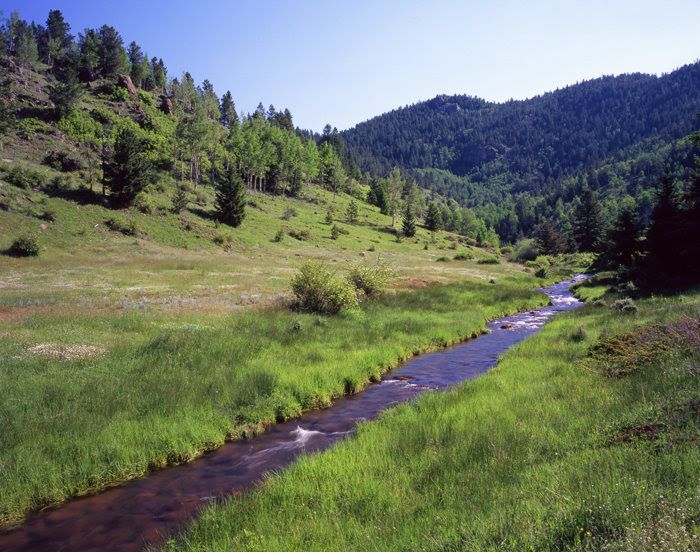
The edge between timber and meadow. That is where elk live.

Frequently asked

The questions people ask about elk.

What is an elk?

An elk (Cervus canadensis), also called wapiti, is the second-largest member of the deer family after the moose. Bulls weigh 700–1,100 pounds, stand up to five feet at the shoulder, and grow a new set of branching antlers every year. Elk are ruminant grazers native to North America and eastern Asia, found across the western United States and in reintroduced eastern herds.
What is the difference between elk and deer?

Elk and deer are both in the family Cervidae, but elk are far larger — a bull elk weighs 700–1,100 pounds versus 150–300 for a whitetail or mule deer buck. Elk are herd animals that bugle during the rut; deer are more solitary and grunt. Elk antlers sweep back into long beams with vertical tines; deer antlers branch forward. The word 'elk' in Europe actually refers to what Americans call a moose, which adds to the confusion.

What is the difference between an elk and a moose?

A moose is the largest deer in the world (up to 1,500 pounds) with broad palmate (flat, shovel-shaped) antlers and a distinctive nose and dewlap. An elk is smaller (700–1,100 pounds for a bull) with branching, tined antlers and a pale rump patch. Moose are solitary; elk live in herds. Confusingly, the animal Europeans call 'elk' is the moose — the North American elk is properly the wapiti.

Where do elk live?

About one million elk live in North America, with the largest populations in Colorado (~280,000), Idaho, Montana, Wyoming, Oregon, Utah, and New Mexico. Elk favor the edge between forest and open meadow — high-country aspen and conifer benches in summer, lower south-facing slopes and valleys in winter. Reintroduced herds also exist in Kentucky, Pennsylvania, Arkansas, Tennessee, Michigan, and other eastern states.

How big do elk get?

A mature Rocky Mountain bull elk weighs 700–730 pounds on average and can exceed 1,100; Roosevelt elk, the largest-bodied subspecies, reach about 1,300 pounds. Cows weigh 500–600 pounds. Bulls stand 4.5 to 5 feet at the shoulder. A trophy bull's antlers can spread four feet and weigh 40 pounds for the pair.

Why are elk called wapiti?

'Wapiti' comes from the Shawnee and Cree word for 'white rump,' describing the pale buff patch on the animal's hindquarters. Wildlife biologists prefer 'wapiti' because 'elk' is ambiguous — in Europe, 'elk' means moose. In everyday North American usage, though, 'elk' is universal and 'wapiti' is rare outside scientific writing.

On sources

Figures synthesized from the Rocky Mountain Elk Foundation, state wildlife agency population estimates (CPW, MFWP, WGFD, IDFG), and published Cervus canadensis literature. Population numbers are agency estimates that vary year to year. Field observations are from the Elk Glade ranch on GMU 59.

From the page to the field

Hunt elk where the herd is largest.

Elk Glade guides bull elk hunts on GMU 59 limited entry, on the south slope of Pikes Peak — inside the largest elk population on Earth. Archery, muzzleloader, and four rifle seasons.