Skip to content

Elk reference · Migration

Do elk migrate?

Most mountain elk do — up to the high country with the spring green-up, down to winter range ahead of the snow. How the seasonal migration works, what triggers it, how far elk travel, why some herds stay put, and why the corridors between matter so much.

The quick answer

High in summer, low in winter — following the snow line up and down.

Picture the mountain as a calendar. In spring, melting snow uncovers fresh green forage that creeps up the slope week by week, and elk climb with it — biologists call it “surfing the green wave.” By summer they’re in the high basins. When fall snow comes, it pushes them back down to lower, sun-warmed winter range. That up-and-down rhythm is the migration most elk run every year — though where forage holds year-round, some herds barely move at all.

Around the year

The seasonal move.

SpringUphill, with the green-up
As snow melts, elk follow fresh growth up the mountain — 'surfing the green wave' of new forage from the valleys to the high country over weeks.
SummerHigh country
Elk hold on cool, high summer range with abundant forage, calving and growing in the alpine and subalpine basins.
FallDownhill, ahead of snow
The rut passes and the first heavy snows push elk down off the peaks toward traditional winter range — the move hunters time their seasons around.
WinterWinter range
Elk concentrate on lower, south-facing, wind-cleared slopes where they can reach forage, riding out the season on stored fat and sparse feed.

On our country

Why the fall move sets the hunt.

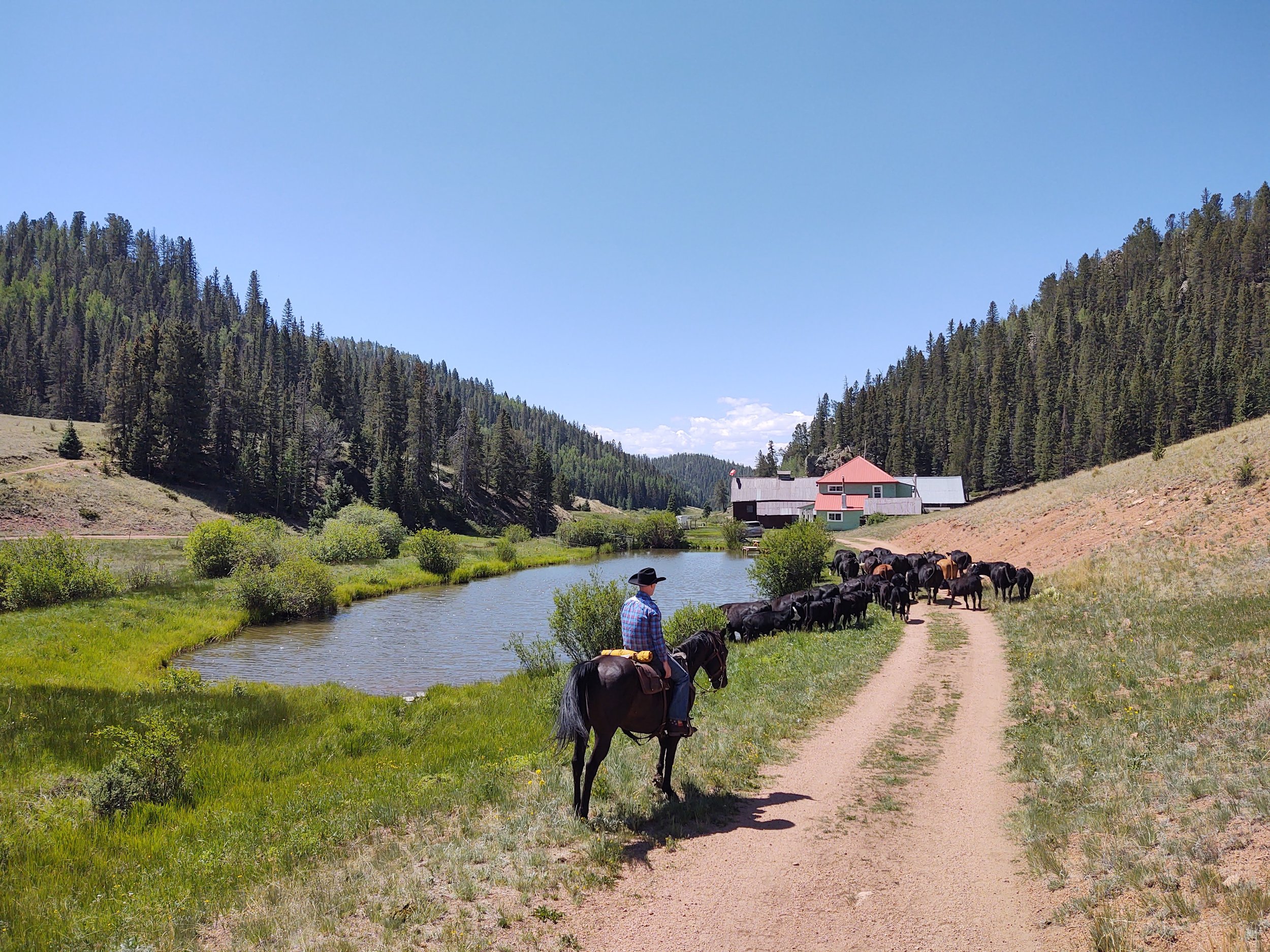
On the south slope of Pikes Peak, the elk run the same logic. They summer high and drift down through our country as the weather turns, which is exactly why the timing of a cold front can make a hunt — a push of snow up top moves elk down onto huntable ground. Knowing where a herd is in its seasonal move, and which benches it crosses on the way down, is most of the work of guiding an elk hunt here.

Frequently asked

Elk migration questions.

Do elk migrate?

Many elk do. Most mountain elk herds are 'altitudinal' migrants — they spend summer in high country and move down to lower winter range when snow arrives, then back up as it melts. Some of these seasonal journeys are among the longest land-mammal migrations in the Lower 48. But not all elk migrate: where food and cover are available year-round at one elevation, herds can be resident and barely move at all.
How far do elk migrate?

It varies enormously by herd and terrain. Some elk shift only a few miles between summer and winter range; others in the Greater Yellowstone region and the northern Rockies travel 40 to 60 miles or more along traditional corridors. The distance is set by where the snow-free winter forage is relative to the summer high country — short where the two are close, long where they're far apart.

What triggers elk migration?

Snow and forage. In spring, melting snow and the flush of new green growth pull elk uphill — they follow the 'green wave' of emerging forage to the high country. In fall, dropping temperatures and accumulating snow push them back down to winter range before deep snow buries the feed. Day length and the rut layer on top, but snow depth and food are the main drivers.

Why do some elk not migrate?

Where a herd can find enough forage and cover year-round without changing elevation, it has no reason to move — these are resident elk. Increasingly, some herds have become resident near valley agriculture and irrigated fields that offer reliable winter feed, shortening or abandoning old migration routes. Mild winters and human-provided food can both turn a migratory herd resident.

Why do elk migration corridors matter?

Migration routes are learned and handed down through the herd over generations, and elk depend on the same corridors year after year. When highways, fences, or development cut a corridor, elk can't simply reroute — the knowledge of where to go is tied to the path itself. Protecting these corridors is one of the most important things conservation does for elk, which is why working ranches that keep winter range and travel routes intact matter so much.

Pillar

The elk guide

The full field reference.

Reference

Where elk live

Summer range, winter range, and the edge.

Guide

The rut + the move

How season timing tracks the elk.

From the page to the field

Hunt elk where the herd is largest.

Elk Glade guides bull elk on GMU 59 limited entry, on the south slope of Pikes Peak — inside the largest elk population on Earth. Archery, muzzleloader, and four rifle seasons.