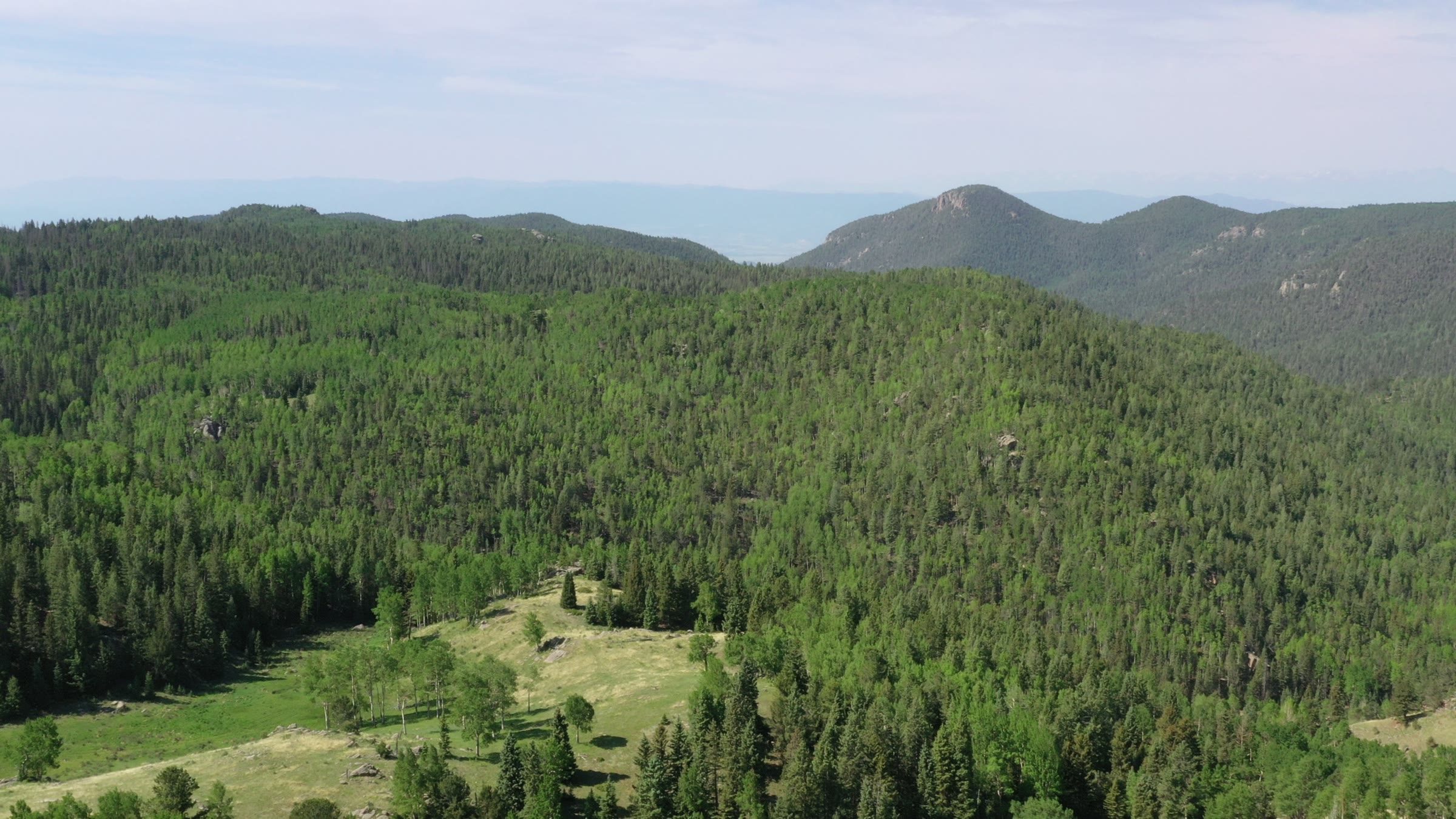
Colorado elk unit · GMU 122
Cheyenne & Kiowa counties
CPW 2024: 38% mule deer success.
About GMU 122
Colorado Game Management Unit 122 sits in Colorado's eastern plains, spanning Cheyenne, Kiowa counties. The primary big game is Mule Deer.
Reference profile. The figures here are CPW’s own 2024 harvest estimates and the county list is from CPW’s unit boundary description. Elk Glade does not hunt this unit, so there are no terrain or trophy claims on this page — numbers only.
Where the unit is
GMU 122 is bounded on the north by U.S. 40; on the east by Kansas; on the south by Colo. 96; on the west by U.S. 287.
Boundary wording is from the CPW 2026 Colorado Big Game brochure, with the compass abbreviations spelled out. These are the exact unit boundaries; the maps in the brochure are approximate, and boundaries can change year to year — confirm in the current brochure before you hunt.
Mule deer success rates
From CPW’s CPW 2024 Deer Harvest Estimates for the 2024 season. Colorado deer licenses are limited — every one of these seasons is a draw tag — so these rates describe hunters who already drew, not your odds of hunting here. The late-season and private-land-only lines are the ones worth staring at: late rifle hunts overlap the November rut, which is why they draw hardest.
| Season | Success | Hunters |
|---|---|---|
| Archery | 26% | 60 |
| Muzzleloader | 25% * | 16 |
| Plains rifle | 50% | 126 |
| Early & late | 48% | 71 |
| All seasons | 38% | 239 |
* Fewer than 50 surveyed hunters — CPW’s estimate for that season carries a wide confidence interval. Read it as a direction, not a number.
Who owns the ground
GMU 122 covers 631,999 acres, of which 3% is public land open to general hunting and 95% is private. This is measured, not estimated: CPW’s own unit boundary laid over the BLM Colorado Surface Management Agency layer, which records who manages the surface of every parcel in the state.
A further 2% is publicly owned but closed to general hunting: National Park Serviceland. Counting that as huntable is the easiest way to badly misread a unit, so it is kept separate here — 5% of GMU 122 is in public ownership, but 3% is ground you can hunt on a general licence.
| National Park Service | 2% |
| State | 3% |
| Unit area | 631,999 acres |
Agency shares are rounded, and can add to a little more than the totals above: the source data overlaps agencies, so each total is measured once as a single area rather than by adding the rows.
Open does not always mean reachable, either. Some public ground inside a unit is landlocked behind private land with no legal access, and a unit can look open on paper while the country that holds elk is all deeded. Treat this as the first question answered, not the last.
The herds behind the unit
Success rates say how often somebody killed an animal. They say nothing about what was standing there, which is why two units with the same success rate can be quite different hunts. These are CPW’s post-hunt estimates for the herds GMU 122 belongs to.
Mule deer
The deer herd ran at 23 bucks per 100 does after the 2025 season against a statewide 31.
- Bucks per 100 does
- 23
- Statewide 31 — this herd runs 8 below
- Herd after the 2025 season
- 6,520
- CPW DAU 28
Herd-wide figures, shared with GMU 125, GMU 126, GMU 127, GMU 130, GMU 132, GMU 137, GMU 138, GMU 139 and GMU 146. CPW estimates mule deer by herd, not by unit, so this is not a count taken inside GMU 122.
A high ratio means males are surviving the season, which is what builds age and antler. It is the clearest public signal of whether a unit holds mature animals or mostly young ones. These are modelled estimates for whole herds, not counts of GMU 122, and CPW revises them every year.
Units next door
GMU 122 shares a boundary with GMU 127, GMU 116, GMU 121, GMU 117 and GMU 126. Neighbouring units often hunt alike and draw quite differently, so they are worth comparing before you apply.
Three seasons, not one
A single year says what happened; three say which way a unit is going. These are CPW’s unit-wide success figures from CPW Colorado Elk and Deer Harvest Estimates, 2022–2024 — the same all-seasons line as the tables above, for each year CPW has published per-unit numbers.
| Season | Mule deer |
|---|---|
| 2022 | 48% (277) |
| 2023 | 38% (276) |
| 2024 | 38% (239) |
Success across all seasons and all manners of take, with CPW’s surveyed hunter count in brackets.
- Mule deer success fell 10 points — 48% in 2022, 38% in 2024.
Three seasons is a short record. Weather, licence allocation, drought and fire can each move a unit several points in a year, and a unit whose surveyed hunter count jumped or collapsed between years is not measuring quite the same thing twice.
How many tags, and how many people after them
A licence count is what turns a points figure into something you can judge. Three points on a 400-licence hunt and three points on a 12-licence hunt are not the same proposition, and a unit with few licences and many applicants is where points pile up fastest.
Mule deer
CPW put 1,125 limited deer licences into the 2026 primary draw for GMU 122, across 15 hunt codes — 910 of them buck or either-sex. Fewer hunters put a GMU 122 code first than there were licences: 0.6 first-choice applicants per licence.
| 2026 deer draw licences | Number |
|---|---|
| Buck or either-sex | 910 |
| Doe or antlerless | 215 |
| All limited licences, across 15 hunt codes | 1,125 |
| First-choice applicants per licence | 0.6 |
Limited licences only. Over-the-counter tags are unlimited and are not counted here, so a unit can put far more hunters in the field than this. Applicants per licence measures pressure, not your odds — Colorado draws on preference points, not at random.
What it took to draw
From CPW’s 2026 primary draw report — the preference-point level at which each deer licence ran out. 731 hunters put a GMU 122 hunt code first on their application, across 15 codes.
| Drawn out at (2026) | Resident | Nonresident |
|---|---|---|
| Buck / either-sex | 0 points | 0 points |
| All deer codes in the unit | 0–2 points | 0 points |
A range spans the unit’s hunt codes: the antlerless tags sit at the bottom, the hardest bull season at the top. Point requirements move every year with quotas and applicant numbers, so read this as the 2026 result rather than a forecast, and check the current CPW draw recap before you apply.
GMU 122 vs GMU 59
GMU 59 is the unit Elk Glade guides, on the south slope of Pikes Peak. Both columns are Colorado Parks and Wildlife’s unit-wide 2024 estimates — every hunter in the unit, public and private, guided and DIY — so they compare like for like.
| CPW 2024 | GMU 122 | GMU 59 |
|---|---|---|
| Elk success, all seasons | — | 19% |
| Mule deer success, all seasons | 38% | 32% |
| Private-land-only elk success | — | 51% |
| Guided hunts | Not us | Elk Glade |
Unit-wide success is what the average tag holder does, not what a guided hunter does — the figure covers everyone in the unit, including first-timers on unfamiliar country. Over the last five seasons 25–50% of Elk Glade’s guided elk hunters filled their tag, all weapons, and 60–90% got an opportunity at an elk. That is a different measurement from the table above and is our own figure, not CPW’s.
The GMU 59 unit profile →
Guided hunts in GMU 59 →
Data sources: elk success rates from CPW Colorado Elk Harvest Estimates (year labeled above). Public-land percentages are approximate. Draw point requirements shift every year and are described as ranges only — always verify the current-year figures in the CPW big game brochure and draw recap before applying.
Plan a hunt
Need help with the 122draw, or want a 59 slot if it doesn’t come through?
Send us a note with what tag you’re applying for and your dates — we’ll walk through the draw strategy and let you know what’s open at Elk Glade.