Morning
Meet your horse and get matched to your ability — beginners ride steady, experienced hands get more horse. A safety and handling briefing, then into the saddle and out to gather the cattle.
Cattle drive · What to expect
Eight hours in the saddle moving real cow-calf pairs across the East Beaver Valley — not a one-hour pony ride dressed up as ranch work. What you actually do, what to wear and bring, the riding skill it takes (beginners welcome), and how the day unfolds.
What you're signing up for
A cattle drive vacation at a working ranch means you join the actual job: gathering cow-calf pairs and moving them between pastures on horseback, the same work the ranch crew does. At Elk Glade in the fall, that’s moving the herd off the high summer range; other seasons it’s a working ride through the country. Either way the cattle are real and the work is real.
That’s the difference between this and a trail ride or a dude ranch’s staged “cattle experience.” You’re part of the crew for the day, riding flank and drag, keeping the herd together, learning to read cattle and handle a horse in real conditions.
The day
Morning
Meet your horse and get matched to your ability — beginners ride steady, experienced hands get more horse. A safety and handling briefing, then into the saddle and out to gather the cattle.
Mid-morning
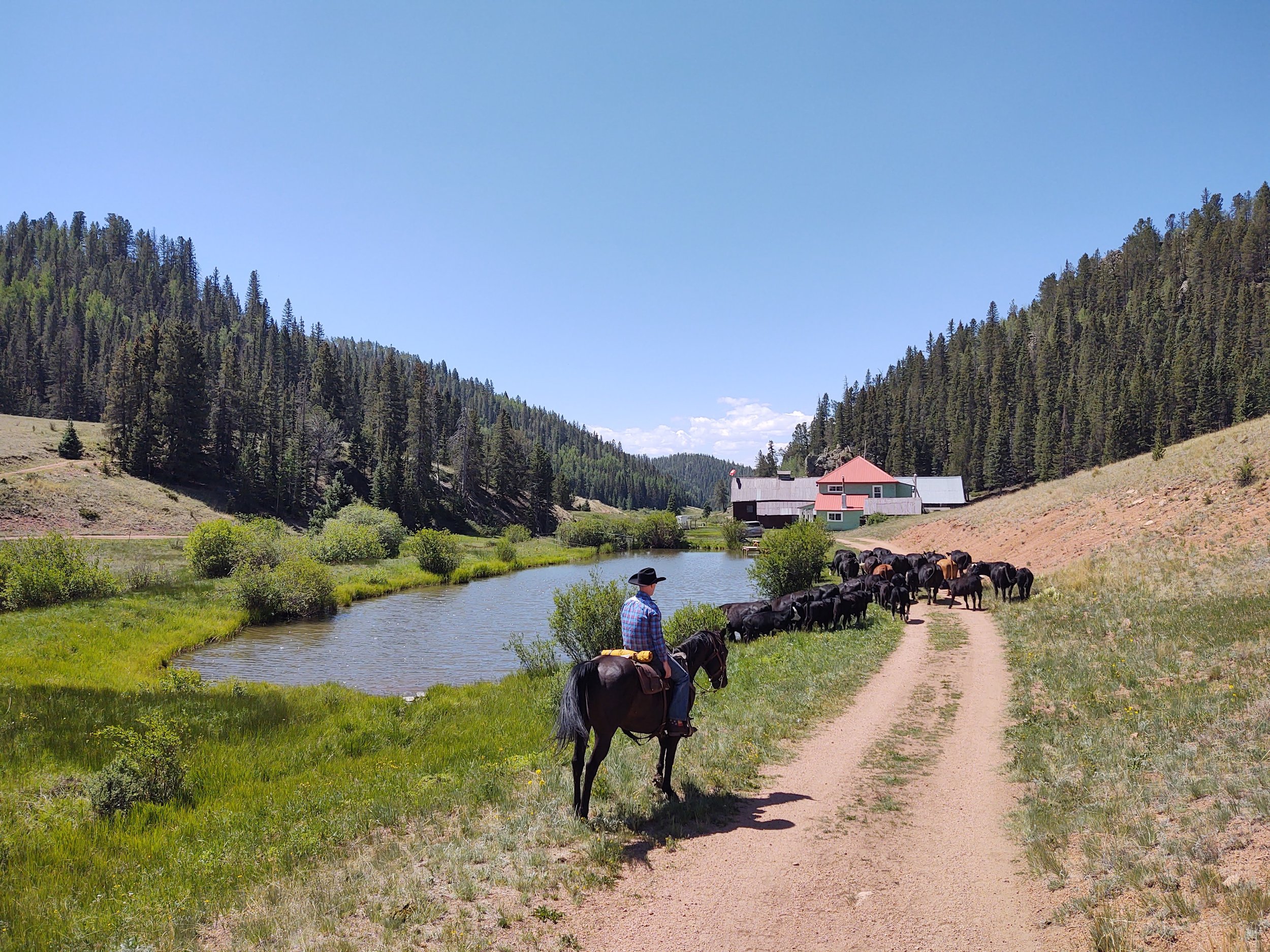
The real work: moving cow-calf pairs along the East Beaver Valley benches, keeping the herd together, pushing stragglers, riding flank and drag. You're not watching a demonstration — you're part of the crew.
Midday
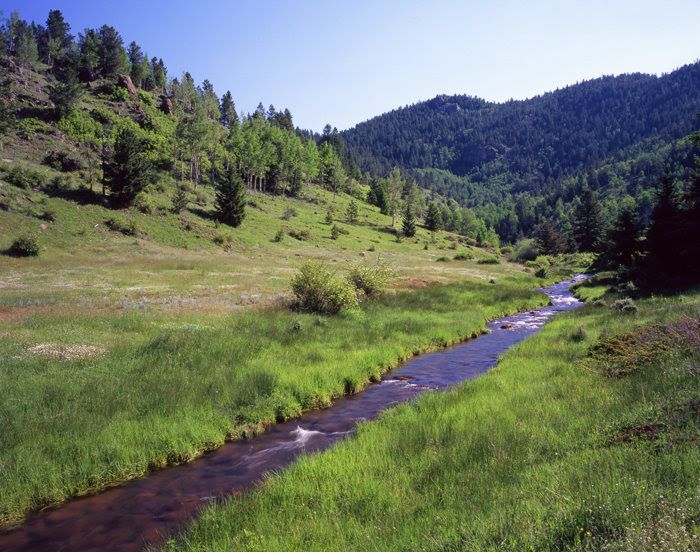
A break to rest the horses and eat, often in the field. The pace follows the cattle and the country, not a clock. Time to take in where you are: 8,500 feet on the south slope of Pikes Peak.
Afternoon
Push the herd to the destination — summer pasture in late June, back down in early October, or a working loop the rest of the season. Eight hours of real horseback work, start to finish.
What to bring
The biggest comfort factors are good boots with a heel and dressing in layers — cold mornings and warm afternoons are the rule at altitude.
Frequently asked
A cattle drive vacation is a stay where guests ride horseback to move cattle on a working ranch — gathering cow-calf pairs and driving them between pastures, just as the ranch crew does. At Elk Glade it's a real day of ranch work, not a staged trail ride: eight hours on horseback moving actual cattle across the East Beaver Valley on the south slope of Pikes Peak.
No — beginners are welcome. Riders are matched to a horse that suits their ability, and a safety and handling briefing comes first. Experienced riders get more horse and more responsibility; beginners get a steady mount and ride where they're comfortable. The key requirements are a willingness to learn, reasonable fitness for a full day in the saddle, and following the guide's direction.
Wear sturdy boots with a heel (riding boots are ideal — avoid flat-soled shoes that can slip through a stirrup), long pants like jeans or riding pants, and layers for the temperature swing at 8,500 feet. Add a brimmed hat, sunglasses, sunscreen, and gloves. Mornings are cold and afternoons warm, so dressing in layers you can shed is the move.
A full cattle drive day at Elk Glade is about eight hours on horseback. The pace follows the cattle and the country rather than a strict schedule — gathering in the morning, driving through midday with a break to rest the horses and eat, and pushing to the destination in the afternoon. It's a real working day, not a one-hour pony ride.
The Elk Glade cattle drive is $1,495 base for up to 4 guests, plus $250 per additional guest, with a maximum of 8. It's bookable directly through Xola, and the contact is Jim Johnson at (303) 355-4868. In fall it's real cattle work moving the herd off summer range; other seasons it's a working ride through the East Beaver Valley.
Ride for real
Eight hours on horseback moving real cattle on the south slope of Pikes Peak. $1,495 base for up to 4 guests, +$250 per additional (max 8). Bookable through Xola, or call Jim at (303) 355-4868.