Skip to content

Draws & licenses · Updated 2026-05-28

Colorado landowner vouchers, explained.

The legitimate way to bypass the CPW draw — what they are, how to get one, what they cost, and what the rules actually allow. Written by a 138-year working ranch on GMU 59 that participates in the Landowner Preference Program.

The short answer

A Colorado landowner voucher is a hunting license issued by CPW to qualifying landowners that can be transferred to a third-party hunter, who then receives a limited-entry tag without going through the primary draw and without consuming preference points. Vouchers are legal, taxable, transferred through the CPW online portal, and priced on a private market between landowners (or their agents) and hunters.

Why we wrote this

The voucher system from the ranch side.

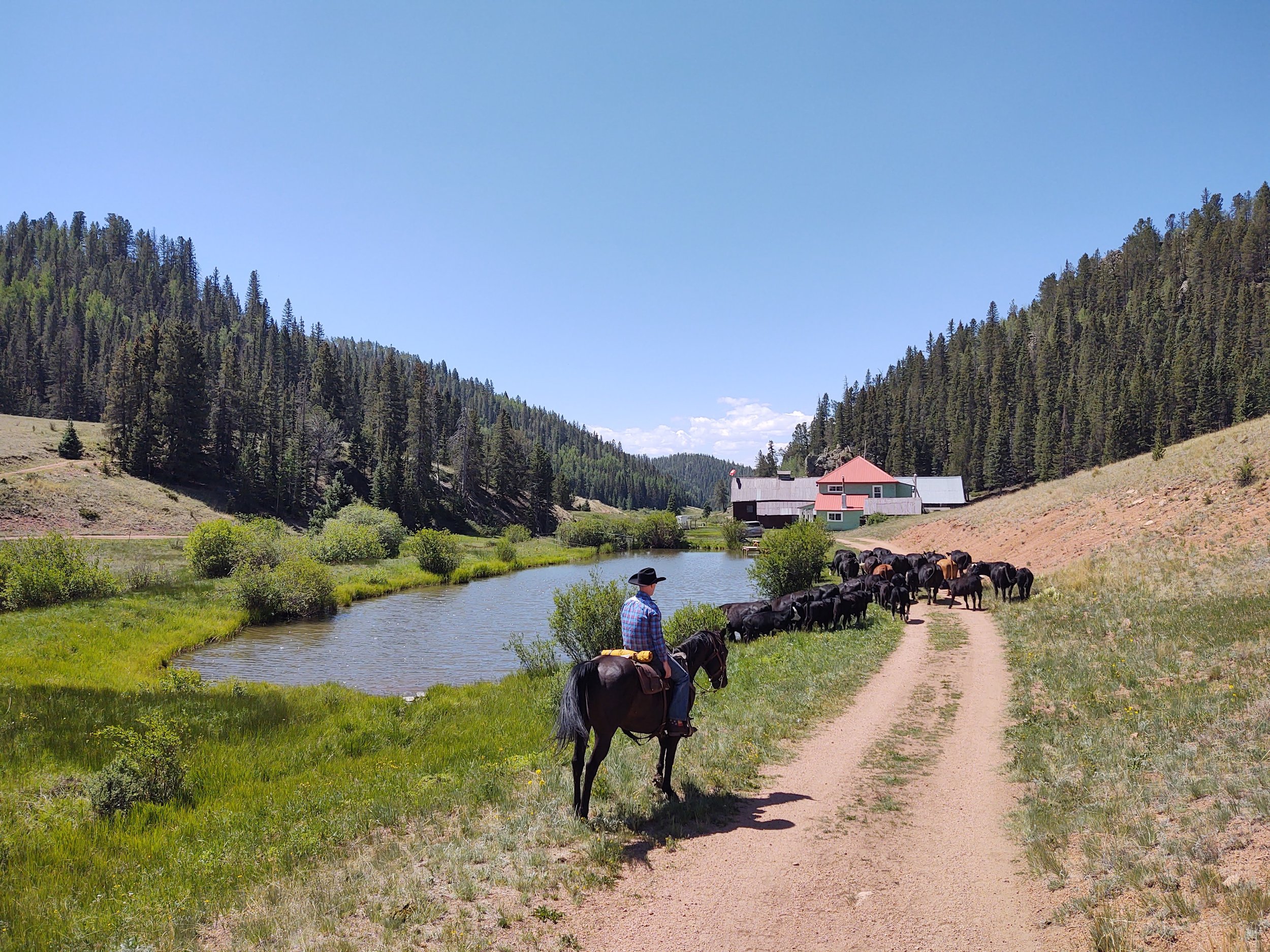
Most articles about Colorado landowner vouchers are written by hunters who’ve bought one, by realtors selling ranches, or by CPW itself in stiff legal language. This guide is written from the ranch side — Elk Glade is a 138-year working cattle ranch on qualifying acreage that participates in the CPW Landowner Preference Program. The mechanics below come from that experience.

The system exists because Colorado wants landowners to support wildlife and not push hunters off private land into the overcrowded public-land hunts. The voucher is the state’s thank-you to landowners who let elk and deer use their property: a tag they can either redeem themselves, give to family, or transfer to a paying hunter.

For a non-resident hunter, the voucher is the cleanest way to know you’ll be hunting in a specific year — the alternative is years of point accumulation with no guarantee any given draw will pull. For a resident hunter who’s close to their target unit’s cutoff, a voucher can be a way to hunt the unit without exhausting their accumulated points.

Eligibility

Who can hold a voucher.

CPW issues vouchers to landowners whose property meets four criteria:

  • Acreage: at least 160 contiguous acres of qualifying private land within the target GMU.
  • Land use: legitimate agricultural use (livestock grazing, hay/crop production), or formal wildlife-supporting use (habitat improvement, conservation easement participation).
  • Annual application: the landowner must submit an annual Landowner Preference Program application to CPW. Vouchers do not auto-renew.
  • GMU participation: the unit must be one CPW has flagged for Landowner Preference. Most popular elk and deer GMUs participate, including GMU 59.

A property meeting all four criteria typically receives one voucher per species per year for the species the property supports. A 2,100-acre family-owned ranch like Elk Glade can hold elk, mule deer, and (where eligible) antelope vouchers in any given year.

Transfer mechanics

How the voucher gets to you.

The transfer is a two-step process. First, the landowner (or their agent) and the hunter agree on a price — that’s a private transaction, taxable to the seller as ordinary income. Second, the landowner initiates the voucher transfer through the CPW online portal, designating the hunter as the recipient via the hunter’s Customer ID (CID).

Once the transfer is complete, the hunter redeems the voucher through their own CPW account. The hunter still pays the standard CPW license fee on top of whatever they paid the landowner — for a non-resident deer tag, that’s currently around $455. So a $750 Elk Glade deer voucher actually costs the hunter $750 + $455 = $1,205 all-in for the tag.

The hunter must hold a valid CPW base hunting license to redeem any voucher. If you don’t already have your annual base license, buy it before initiating the voucher transfer process.

Avoid

Four common voucher scams.

  • Off-platform voucher sales

    Legitimate vouchers transfer through the CPW online portal. Sellers asking for cash or wire payment outside the CPW system without a CID-verified transfer aren't legitimate.

  • Out-of-state voucher resellers

    Some entities buy CO vouchers and resell at markup to non-residents. Legitimate resellers exist (some outfitters do this above-board) but verify they're a CPW-recognized agent and that the underlying acreage qualifies.

  • Voucher offers without GMU specifics

    A voucher is tied to a specific GMU and hunt code. Anyone offering a 'flexible Colorado elk voucher' that doesn't name the unit is selling something that doesn't exist.

  • Bundled with prerequisite licenses

    You still need a valid CPW base hunting license to redeem any voucher. If a seller doesn't mention this, they likely don't understand the system.

If a voucher offer looks too cheap or has a strange transfer mechanism, call us and we’ll tell you whether it smells right. We don’t charge for the sanity check.

Frequently asked.

What is a Colorado landowner voucher?

A landowner voucher is a hunting license issued by Colorado Parks and Wildlife (CPW) to landowners whose property meets the Landowner Preference Program eligibility requirements. The voucher entitles the holder to a hunt-code license in a specified Game Management Unit (GMU) without going through the primary draw and without consuming preference points.

Who is eligible for a Colorado landowner voucher?

Eligibility requires owning at least 160 contiguous acres of qualifying private land within a participating GMU, putting the land to legitimate agricultural or wildlife-supporting use, and applying through the CPW Landowner Preference Program. Ranches, farms, and certain conservation properties qualify; residential acreage typically does not.

How does a landowner voucher transfer to a hunter?

Vouchers are issued to the landowner, who can transfer them to a third-party hunter via the CPW online portal. The receiving hunter must hold a valid CPW Customer ID and the appropriate base hunting license. Transfer is recorded with CPW; the hunter then redeems the voucher for the underlying tag at full license fee.

What does a Colorado landowner voucher cost?

Voucher prices vary widely by unit, species, and weapon class, and many landowners only sell them with a hunt. At Elk Glade, a deer voucher is +$750 added to a guided hunt, when available. The hunter also pays the standard CPW license fee on top of the voucher price.

Do landowner vouchers consume preference points?

No. Acquiring and redeeming a landowner voucher does not consume the hunter's preference points. This is the primary appeal — you receive a limited-entry tag without spending your accumulated points or going through the draw.

Can I deduct a voucher purchase on my taxes?

A voucher purchased as part of a guided hunt package may be deductible as a recreational expense depending on context, but vouchers are generally not deductible by individual hunters. Voucher sale by the landowner is reportable income. Consult a tax professional — CPW does not provide tax guidance.

Are landowner voucher transactions legal?

Yes. CPW explicitly authorizes voucher transfers under the Landowner Preference Program; the transfer process is built into the CPW online portal. The transactions are taxable income to the landowner. Be cautious of off-platform offers — legitimate voucher transfers happen through the CPW account interface.

How is a landowner voucher different from a guided hunt?

A voucher provides the tag only — it doesn't include guiding, lodging, food, or transportation. A guided hunt package includes those services. Many guests acquire a voucher through their outfitter and then book the guided hunt separately; the outfitter coordinates both transactions but bills them as separate line items.

Sources

GMU 59 vouchers

Ask whether we have one available this year.

Voucher availability at Elk Glade varies year to year by species and season. Call us in January or February with your target weapon class and we’ll tell you what we’re holding and whether the math beats the draw for your situation.