Skip to content

Fly fishing · Reading water

Reading trout water.

A stream stops looking random the moment you learn what a trout wants: food, a rest from the current, and a roof over its head. Riffles, runs, pools, seams, and pocket water — where the fish actually hold, and how to find them on a small mountain creek.

The one idea

Food, a current break, and cover — in one spot.

A trout lives by a simple equation: take in more food energy than it spends holding position, and don’t get eaten doing it. So it tucks into water where the current is broken or slowed — behind a rock, along a seam, at the lip of a pool — but where the faster flow right beside it still delivers a steady drift of insects. Add a bit of cover overhead, and that’s a trout’s address.

Once you see moving water as a map of those spots instead of an undifferentiated rush, you stop casting at random and start casting at fish. Here are the lies to look for.

The lies

Six places trout hold.

Riffles
Shallow, broken, oxygen-rich water tumbling over gravel. The choppy surface hides trout from above and the current delivers a steady conveyor of food. Prime feeding water, especially the heads of riffles and where they drop into deeper flow.
Runs
The deeper, steady-flowing water below a riffle — moderate speed, good depth, plenty of cover from the broken surface above. Often the single most reliable holding water on a stream; work it carefully.
Pools
Deep, slow sections that hold the biggest fish. The head of a pool, where current and food pour in, and the tail, where fish sip in the slowing flow, are usually better than the dead-slow middle. Approach pools low and quiet — the fish can see you.
Seams
The line where fast water meets slow. Trout sit in the slower water just off the current, expending little energy while the fast lane carries food right past their nose. Find a seam and you've usually found fish.
Pocket water
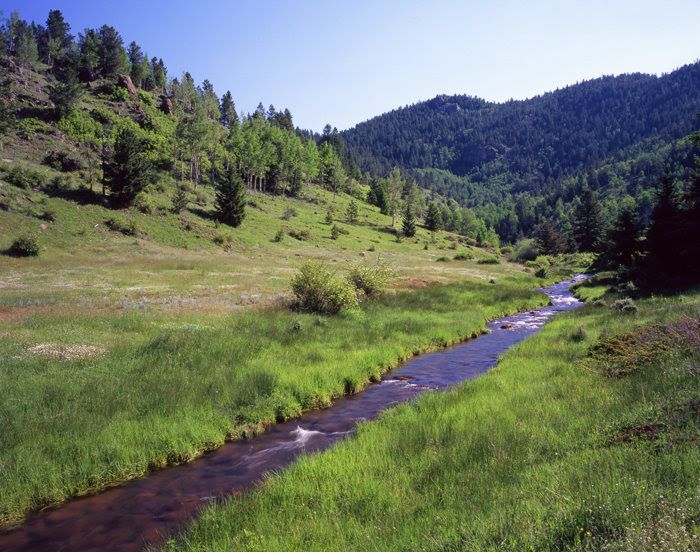
The calm pockets behind and in front of rocks and boulders in fast water. Each rock breaks the current and creates a little rest stop where a trout can hold and feed. On steep mountain creeks, pocket water is much of the game.
Cover
Undercut banks, log jams, overhanging brush, and shade. Trout want a roof — protection from overhead predators — close to feeding water. The best lies combine food, current break, and cover all in one place.

Frequently asked

Reading-water questions.

How do you read trout water?

Look for where a trout can get food without fighting the current, while staying near cover. That means reading the stream for three things at once: a steady supply of drifting food, a break from the full force of the current to rest in, and protection from predators above. The spots that combine all three — seams, the edges of riffles and runs, pockets behind rocks, the heads and tails of pools, undercut banks — are where fish hold. Once you see water that way, trout stop being random.

Where do trout hold in a stream?

Trout face upstream and hold where the current is broken or slowed but food still drifts past — they want maximum food for minimum effort, near cover. Classic lies include riffles and the runs below them, seams where fast and slow water meet, pockets behind boulders, the heads and tails of pools, and along undercut banks and log jams. They avoid both dead-still water with no food delivery and the full blast of the fastest current.

What is a seam in fly fishing?

A seam is the visible line where two currents of different speeds meet — typically fast water beside slow. It's prime trout water because a fish can hold in the slow side, resting out of the heavy current, while the fast lane right next to it conveys a steady stream of food within easy reach. Drifting a fly down a seam is one of the most reliable presentations in moving water; learn to spot seams and you'll find fish.

How do you find trout on a small mountain creek?

On a small, steep creek, focus on pocket water and plunge pools. Every boulder creates a cushion of calm water in front of and behind it where a trout can hold, and every little plunge digs a pool that collects fish and food. Undercut banks and shaded spots hold fish too. The water is often clear and the trout spooky, so approach from downstream, stay low, and make your first cast to each likely pocket count — that's the East Beaver Creek game in a nutshell.

Why do trout face upstream?

Two reasons: oxygen and food. Facing into the current keeps water flowing over their gills the right way to breathe, and it puts them looking straight at the conveyor belt of insects the current carries down to them. Because trout almost always face upstream, anglers usually approach and fish upstream too — coming from behind the fish's field of view and drifting the fly down to it the way real food arrives.