Skip to content

Ranching reference · Definitional

What is a working ranch?

A real, operating livestock business where the land and the cattle come first — not a resort with a corral. What separates a working ranch from a dude ranch and a guest ranch, what the daily work actually is, and how the modern agritourism model lets you join it.

The definition

The cattle would be there without you.

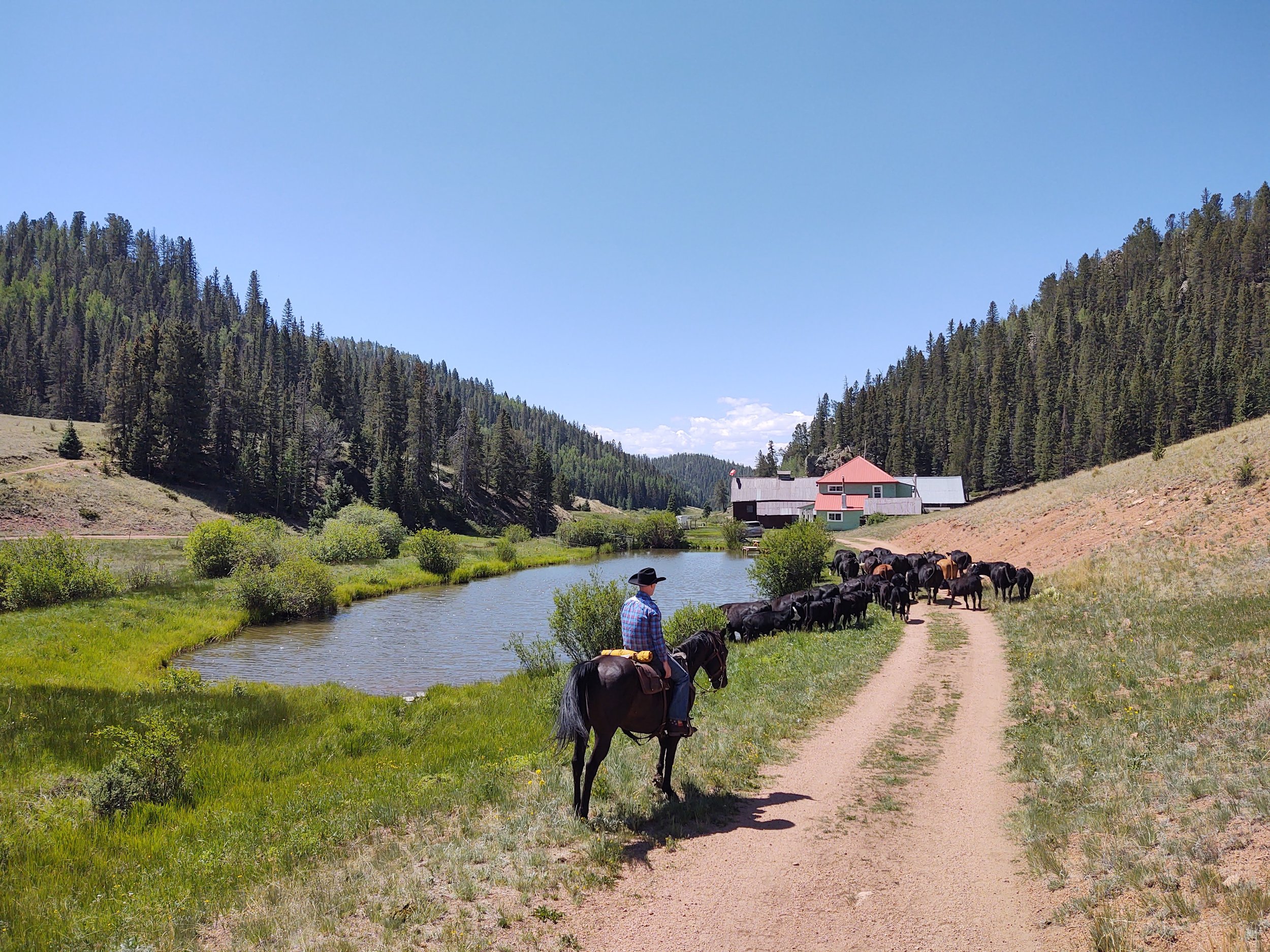
That’s the simplest test of a working ranch: the operation exists on its own terms. A working ranch is a real livestock business — usually cattle — where the animals and the land are the primary purpose, and the work follows the seasons whether or not a single guest ever shows up. Calving in spring, grazing and fence in summer, the gather and drive in fall, feeding through winter.

When a working ranch hosts guests — as many now do — visitors join the real thing. That’s the difference from a dude ranch, where the guest experience is the entire point and the cattle, if there are any, are set dressing.

Three categories

Working, dude, guest — what each means.

Working ranch

Primarily
An operating livestock business
Guests
Guests (when hosted) join real work — moving cattle, riding fence, branding, gathering.

The cattle and the land come first. Guest programming exists alongside the operation to diversify revenue and keep the ranch viable. Elk Glade is a working ranch.

Dude ranch

Primarily
A guest resort with a Western theme
Guests
Guests are the business. Horseback rides and 'ranch activities' are staged for visitors.

Often excellent hospitality and beautiful settings — but the cattle, if present, are scenery. The product is the guest experience, not an operating ranch.

Guest ranch

Primarily
A hospitality property (overlaps with dude ranch)
Guests
Lodging, meals, and recreation packaged as a vacation. May or may not run any livestock.

The term is often used interchangeably with 'dude ranch.' Some guest ranches sit on working land; many are purely hospitality operations.

The work, season by season

What actually happens on the ranch.

Spring

Calving + branding

Cows drop calves; the crew tags, vaccinates, and brands. Long days, new life, mud and cold mornings.

Summer

Grazing management + fence

Moving cattle through rotational pastures, riding and fixing fence, managing water. The maintenance season that keeps the operation running.

Fall

Gather + the cattle drive

Bringing the herd down off summer range — the classic cattle drive — sorting, shipping, and preparing for winter.

Winter

Feeding + survival

Feeding the herd through snow, protecting calves, monitoring water and shelter. The hard season that tests the operation.

The modern model

Why working ranches open their gates.

Cattle prices are volatile and margins are thin. For a family ranch on valuable land — especially near growing Front Range cities — the math of cattle alone often doesn’t close. The options become stark: subdivide, sell to developers, or find another way to make the land pay.

Agritourism is that other way. By hosting guided hunts, cattle drives, ranch stays, fishing, and events, a working ranch diversifies its income enough to keep the cattle operation — and the open land — intact. The guests aren’t a distraction from the ranch; they’re part of what keeps it a ranch.

That’s the model at Elk Glade. The hunts and the cattle drives and the lodge stays keep the land in grazing and fund the conservation work, and the whole thing holds together as one 138-year-old enterprise on the south slope of Pikes Peak.
Frequently asked

Working ranch questions.

What is a working ranch?

A working ranch is a real, operating livestock business — most commonly a cattle operation — where the land and animals are the primary purpose. The daily work follows the seasons: calving and branding in spring, grazing and fence work in summer, gathering and shipping in fall, feeding through winter. When a working ranch hosts guests, visitors participate in genuine ranch activities rather than staged performances.

What is the difference between a working ranch and a dude ranch?

A working ranch is an operating livestock business first; guest hosting is secondary and involves real work. A dude ranch is a guest resort first, built around hospitality and recreation, where 'ranch activities' are staged for visitors and cattle (if any) are scenery. The simplest test: on a working ranch, the cattle would still be there if the guests weren't. On a dude ranch, the operation exists for the guests.

What is a guest ranch?

A guest ranch is a hospitality property offering lodging, meals, and recreation as a packaged vacation — the term overlaps heavily with 'dude ranch.' Some guest ranches sit on working agricultural land and offer authentic ranch experiences; many are primarily resorts with a Western theme. The label alone doesn't tell you whether real ranch work happens there.

Can you visit or stay on a working ranch?

Yes — many working ranches now host guests as part of an agritourism model that diversifies ranch income. At a working ranch like Elk Glade, you can join a real cattle drive, ride the trail network, fish private water, and stay in the ranch lodge. The difference from a dude ranch is that the activities are real ranch work and the operation is genuine.

Why do working ranches host guests?

Agritourism — hosting guests for hunts, cattle drives, stays, and events — diversifies a ranch's revenue beyond cattle prices, which are volatile and often thin. For many family ranches facing development pressure and tight margins, guest programming is what keeps the operation financially viable without subdividing or selling the land. It's a survival model as much as a hospitality one.