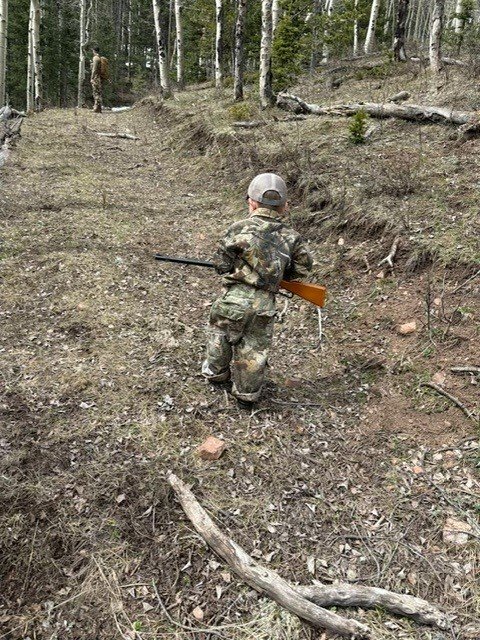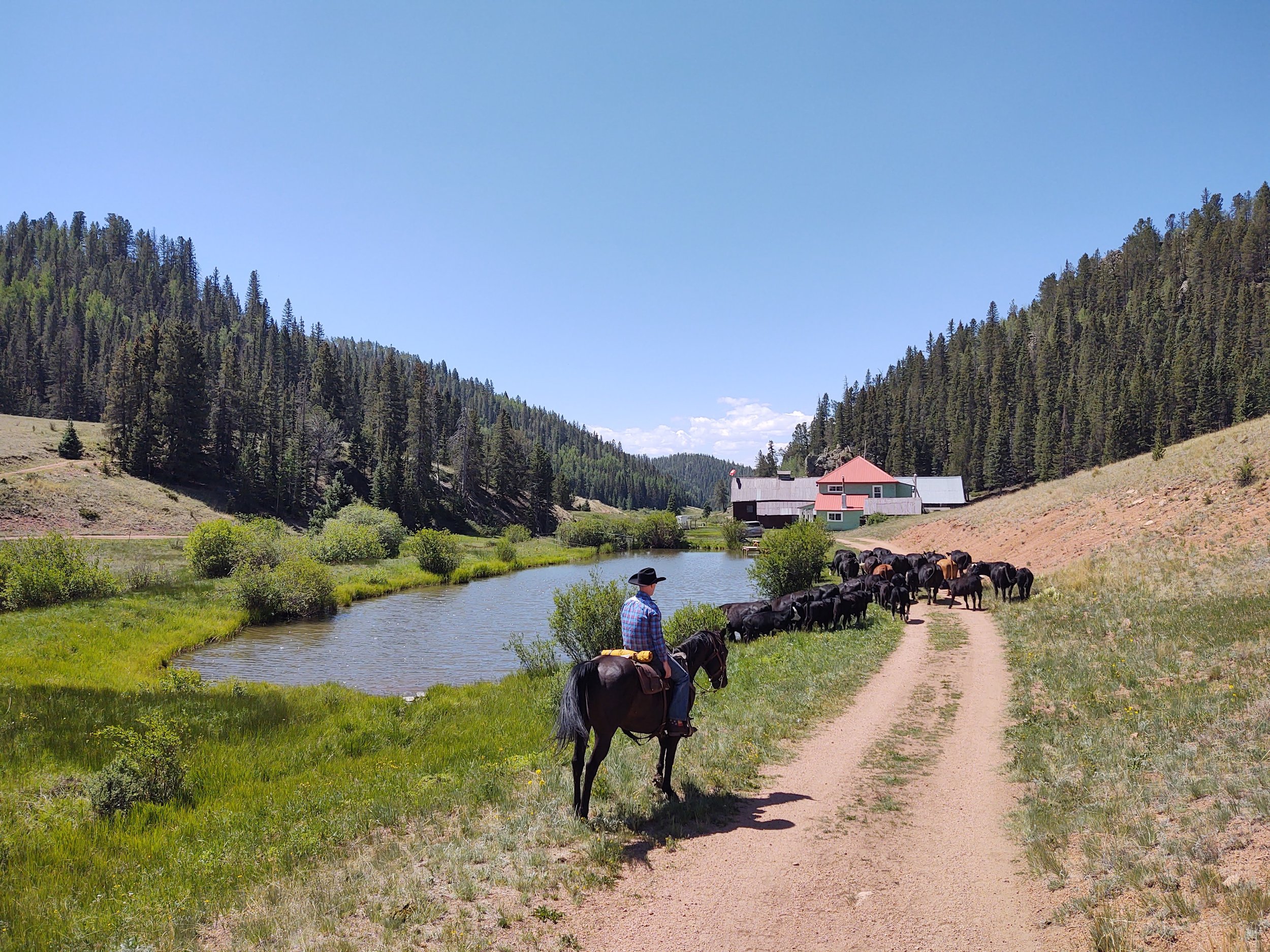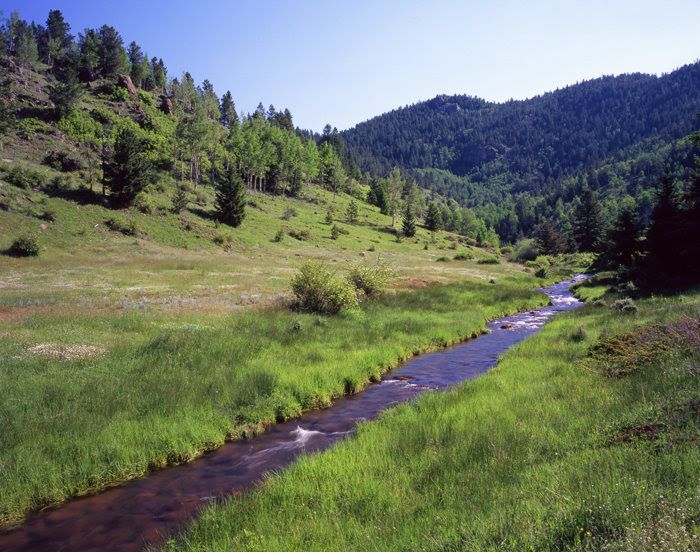
Most of a successful elk hunt happens before the season — in the quiet weeks of late summer, reading what the country is already telling you.
By Andre3 min read
By August the elk have written most of the season's story on the ground. You just have to learn to read it.
We walk the benches in the weeks before the hunt — not to push elk, but to listen to the country. A wallow churned to chocolate with a fresh track in the mud and that musky smell still hanging means a bull is using it now. A line of rubs on the young aspen, bark hanging in strips, tells you where he travels. Matted ovals in the dark north-facing timber are beds. Trails worn an inch deep between the meadow and the timber are the commute. None of it is hidden; it just takes time on your feet to see it.
The other half of scouting now happens on a screen. Before anyone laces a boot, we have the meadow edges, the water, the saddles, and the bedding timber marked on a map. The screen gets you to the right neighborhood; the bench tells you which house the elk live in. We wrote both halves out — the digital and the boots — in the elk scouting guide, and what the country itself offers in the where-elk-live reference.
A guided hunter doesn't have to do any of this — it's most of what the months of guiding buy you. But whether you hunt with us or chase your own tag somewhere else, the lesson holds: the elk already told you where they are. Go read it.