Geology, water, cover, and light hunting pressure. The south slope of Pikes Peak is not an accident — it's a place the herd has chosen for reasons you can see in the dirt.
By Andre5 min read
Hunters ask, often: why this country?
The short answer is the south face of Pikes Peak holds elk in October because the geology, water, and cover stack in a way that they don't anywhere else in the unit. The longer answer is worth the read.
The aspect
GMU 59 wraps the south and southeast faces of Pikes Peak. South-facing slope means more sun per acre than north of the divide — snow melts first here, the grass cures longer, and through most of October the upper benches are still feeding country. By the time the north slope is locked in five inches of crusted snow, our south meadows are still chewing dry brown bunchgrass under the ponderosa.
Elk migrate to feed. They go where they can still get a daily belly through the freeze-up. October on a south slope is exactly where they go.
The water
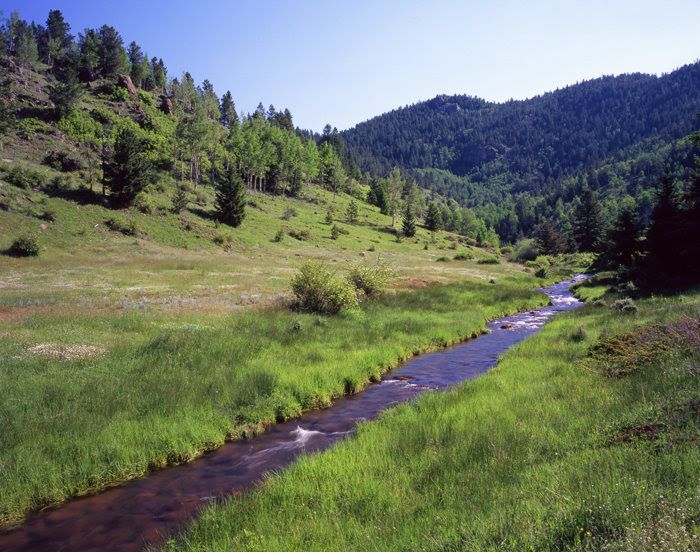
East Beaver Creek runs cold and spring-fed through the leased ground. Three miles of it. Year-round. The next meaningful surface water — Beaver Creek to the north or Fourmile to the south — is at least six miles in either direction.
Elk don't drink as often as people think, but they bed near water and they like a wallow in early September. The bull I shot in 2017 came off the wallow at the top of the second meadow, downhill from the spring head. Most of our archery success comes off the water this way.
The cover
Open ponderosa on the lower benches, mixed conifer in the middle, aspen and spruce-fir at the top. Three habitat types within an hour's walk. That gives elk what they need at every part of the day — bedding cover at the top, transition cover through the middle benches, feeding on the open lower meadows at first and last light.
The canyon system here is the largest wildlife corridor between New Mexico and Wyoming on the Colorado Front Range — country whose conservation value Colorado Parks and Wildlife recognized with a grant to Elk Glade. The land between the leased ground and the next road on the east is twelve miles of unbroken country. Elk push through it when pressure rises. They come back when it eases.
The pressure pattern
In GMU 59, 1st and 4th rifle bull elk are limited entry, and 2nd and 3rd rifle bull elk are over the counter, so the public land around us gets busier in those two seasons.
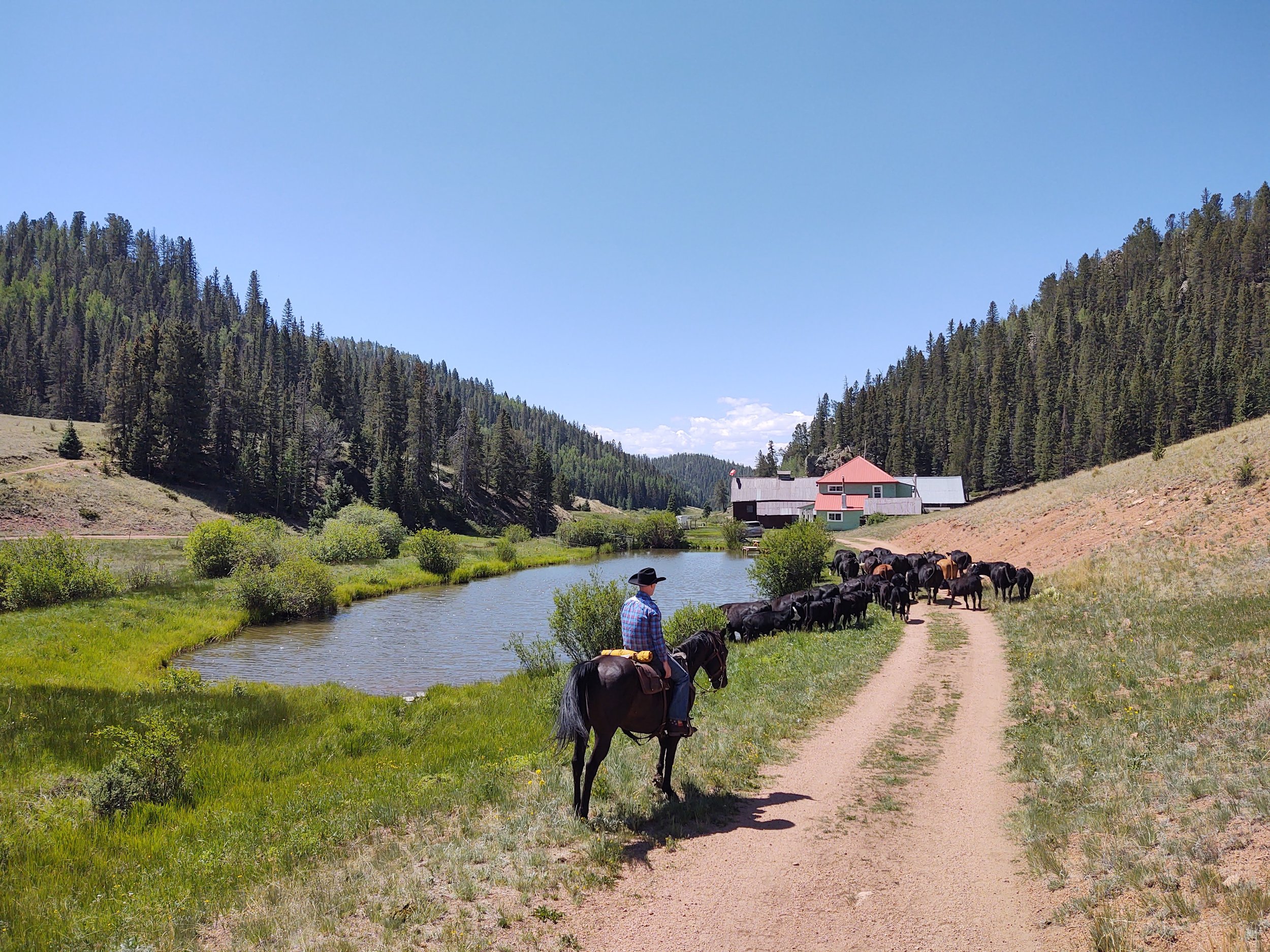
We sit on a checkerboard of leased ground, BLM, USFS, and a few state sections. The leased ground is where guests hunt; the surrounding public is where the herd rotates onto when the public-land guys push them. Our country is the catch-basin for elk getting bumped off the wider unit.
In a normal year we'll see herd movement onto our south meadow within twelve hours of the public seasons opening. They come because the country is the country and we don't put a road through it.
The long view
The last factor isn't biology; it's history. The hunters have been here for many seasons of consistent, low-density pressure. The elk in GMU 59 have learned, generation over generation, that this canyon is not the canyon where things go bad for them.
That isn't romance; that's herd memory. Elk transmit risk patterns through cow lineages. A canyon where the pressure stays light is a canyon a bull will hold in.
That's why GMU 59 holds elk in October. That's why we hold the unit.
If you want to know more about hunting this country, the bull elk page has the full season-by-season write-up. For the licensing side, see when to apply for the 2027 draw.