Skip to content

Reference · Plain-English definitions

The elk hunting glossary.

Every term a new elk hunter trips over, defined plainly — from bugle and the rut to GMU, OTC, preference points, broadside, and wapiti. Each one links to the full reference if you want to go deeper.

The animal

Wapiti
Another name for elk, from a Shawnee/Cree word meaning 'white rump.' Biologists prefer it because 'elk' means moose in Europe. →
Bull
An adult male elk. Grows and sheds antlers every year; can weigh 700–1,100 lb. →
Cow
An adult female elk. Leads the herd most of the year; weighs 500–600 lb. →
Calf
A baby elk, born late May–June with a spotted coat for camouflage. →
Bugle
The rising, whistling scream a bull makes during the rut to advertise dominance and challenge rivals. →
Velvet
The blood-rich, furred skin that sheaths growing antlers in spring and summer before they mineralize into bone. →
Royal / 6x6
A bull with six points on each antler — the classic mature configuration. A 7x7 is an 'imperial,' an 8x8 a 'monarch.' →
Spike
A young bull (usually yearling) with single, unbranched antlers. Protected in some units to let bulls mature.

The hunt

The rut
The autumn breeding season (peak ~Sep 15–25 for elk) when bulls gather harems, bugle, and fight. →
Spot-and-stalk
Finding elk with optics from a distance, then closing the gap on foot — the dominant open-country tactic. →
Glassing
Scanning country with binoculars or a spotting scope to locate game before moving.
Broadside
An elk standing side-on, both lungs exposed — the highest-percentage ethical shot angle. →
Quartering away
An elk angled away from the hunter; an excellent shot angle that threads into the vitals behind the near shoulder. →
Cow call
A soft mew imitating a cow elk; used to reassure, locate, or pull a herd bull off his harem during peak rut. →
Field dressing
Removing the internal organs and beginning to cool a harvested animal in the field to preserve the meat. →
Pack out
Carrying the quartered meat (and head/antlers) out of the field, often by backpack or horseback.

Tags + draws

GMU
Game Management Unit — the numbered area defining where a tag is valid. Elk Glade hunts Colorado GMU 59. →
OTC
Over-the-counter — a tag you can buy directly without a draw. Colorado still offers OTC elk in several seasons. →
Limited entry
Units/seasons where tags are capped and allocated by draw, controlling hunter density. →
The draw
The lottery process by which limited-entry tags are allocated. Colorado's primary application closes the first week of April. →
Preference point
A point earned (or banked) each year you apply, used to improve draw odds for harder units. →
Landowner voucher
A transferable tag issued to qualifying landowners that lets a hunter bypass the public draw. →
Habitat stamp
A small required fee added to a Colorado hunting or fishing license that funds wildlife habitat.
Success rate
The share of hunters who tagged out — harvested animals divided by hunters in the field. Not the same as opportunity rate. →

Gear + ranch

Controlled-expansion bullet
A premium big-game bullet built to hold together and penetrate heavy bone and muscle — essential for elk. →
Working ranch
A real, operating livestock business where guests join genuine ranch work — distinct from a dude ranch. →
Cattle drive
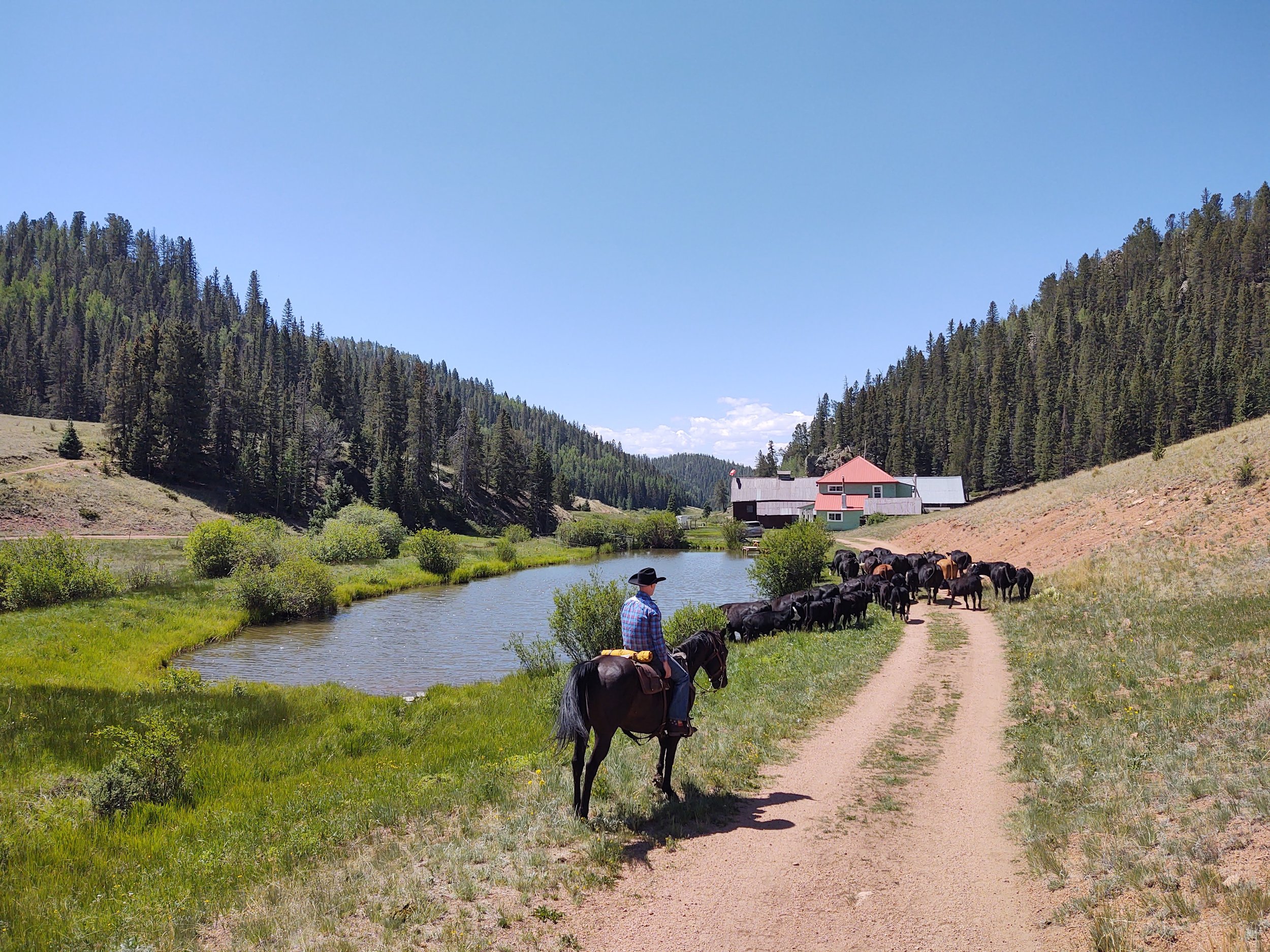
Moving cattle on horseback between pastures — at Elk Glade, real cow-calf work, not a staged ride. →
Merriam's
The white-tipped mountain subspecies of wild turkey, hunted at Elk Glade on the south slope of Pikes Peak. →
Stot
The mule deer's signature bounding gait — springing off all four legs at once over broken country. →
Cutthroat
Colorado's only native trout, named for the orange slash under the jaw; the greenback is the state fish. →

Frequently asked

Common term questions.

What is the difference between a bull and a buck?

A bull is a male elk (or moose, bison); a buck is a male deer (whitetail or mule deer). Both are antlered males in the deer family, but the words track the species — elk have bulls and cows, deer have bucks and does. A baby elk is a calf; a baby deer is a fawn.
What does OTC mean in hunting?

OTC stands for 'over-the-counter' — a hunting tag you can buy directly from a license agent or online without entering a draw. Colorado still sells OTC elk tags for several seasons, which is part of why it's the most accessible elk state for nonresidents. The alternative is limited entry, where tags are capped and allocated by a draw.

What is a GMU?

A GMU is a Game Management Unit — a numbered geographic area that wildlife agencies use to manage hunting and define where a tag is valid. Colorado is divided into GMUs, each with its own season dates, tag allocations, and draw odds. Elk Glade hunts GMU 59, on the south slope of Pikes Peak.